
If you're passionate about movement, helping people improve their health and creating meaningful career opportunities in the wellness industry, becoming a Pilates instructor could be an excellent career choice.
As Australians continue to invest in preventative health, injury management, strength training and active ageing, demand for qualified movement professionals continues to grow, creating opportunities across Pilates studios, fitness facilities, wellness centres, allied health clinics and community recreation settings. Current job opportunities show Pilates instructors being recruited for both mat and reformer-based roles across a variety of environments.
One of the biggest advantages of a Pilates career is its flexibility. Some instructors work part-time around family commitments, while others build full-time careers teaching classes, delivering one-on-one sessions, managing studios or specialising in rehabilitation and movement education.
For exercise professionals, Pilates can also provide a valuable specialisation that expands career opportunities and client demand.
Whether you're a school leaver, career changer, Personal Trainer or Group Exercise Instructor looking to specialise, this guide explains everything you need to know about becoming a Pilates instructor in Australia, including qualifications, career pathways, earning potential and where to find Pilates instructor jobs.
Quick Answers
What qualifications do I need to become a Pilates instructor?
Most employers look for recognised Pilates instructor training, current First Aid and CPR, and relevant movement or fitness qualifications. AUSactive recognises two Pilates Professional pathways: Fitness Pilates Instructor and Pilates Method Teacher.
How long does it take to become a Pilates instructor?
The timeframe varies depending on the training pathway chosen, prior experience and whether you are completing mat Pilates, reformer Pilates or comprehensive Pilates training.
How much do Pilates instructors earn in Australia?
Income varies by location, experience, qualification level, employment model and whether instructors teach group classes, private sessions or specialised programs.
Is Pilates instruction a good career?
For people who enjoy helping others improve movement, strength, confidence and wellbeing, Pilates offers a rewarding career with flexibility, professional growth and increasing demand.
Are Pilates instructors in demand?
Yes. Pilates continues to be one of Australia's fastest-growing exercise modalities, with opportunities across fitness clubs, Pilates studios, leisure centres, wellness businesses and allied health environments.
What Does a Pilates Instructor Do?
A Pilates instructor helps people improve strength, flexibility, posture, balance, coordination and body awareness through structured movement programs.
Depending on their qualifications and workplace, instructors may deliver:
- Mat Pilates classes
- Reformer Pilates classes
- One-on-one Pilates sessions
- Small group sessions
- Injury prevention programs
- Mobility training
- Strength and conditioning support
- Active ageing programs
- Prenatal and postnatal exercise
Beyond leading classes, instructors are often responsible for:
- Client onboarding
- Exercise modifications
- Class programming
- Safety monitoring
- Progress reviews
- Building positive client relationships
Modern Pilates instructors are educators as much as they are coaches. They help clients better understand their bodies, improve movement confidence and achieve long-term health goals.
Many Pilates professionals describe the role as highly rewarding because they can see measurable improvements in their clients' strength, mobility, posture, confidence and quality of life.
Are Pilates Instructors in Demand in Australia?
The short answer is yes.
Pilates continues to be one of the fastest-growing exercise modalities in Australia. Demand exists across boutique Pilates studios, gyms, recreation centres, wellness businesses and allied health clinics. AUSactive has identified Pilates as one of the strongest growth areas within the industry.
Current opportunities include:
- Reformer Pilates Instructors
- Mat Pilates Instructors
- Group Exercise Coaches specialising in Pilates
- Lead Pilates Instructors
- Pilates Educators
- Pilates Professionals working in allied health environments
Growing Focus on Preventative Health
Australians are increasingly seeking exercise options that improve strength, mobility and movement quality while remaining accessible across different ages and fitness levels.
Pilates aligns perfectly with these goals, making it attractive to a broad range of clients.
Expanding Employment Opportunities
Historically, Pilates instructors primarily worked in dedicated studios. Today, employers include:
- Commercial gyms
- Fitness clubs
- Community recreation centres
- Wellness businesses
- Allied health clinics
- Physiotherapy practices
- Corporate wellbeing providers
This diversification provides more career opportunities than ever before.
Active Ageing and Healthy Longevity
Pilates is increasingly recommended to support mobility, balance, posture and functional strength. As Australia's population ages, demand for safe movement-based exercise programs is expected to continue growing.
Qualifications Required
What qualifications do I need to become a Pilates instructor in Australia?
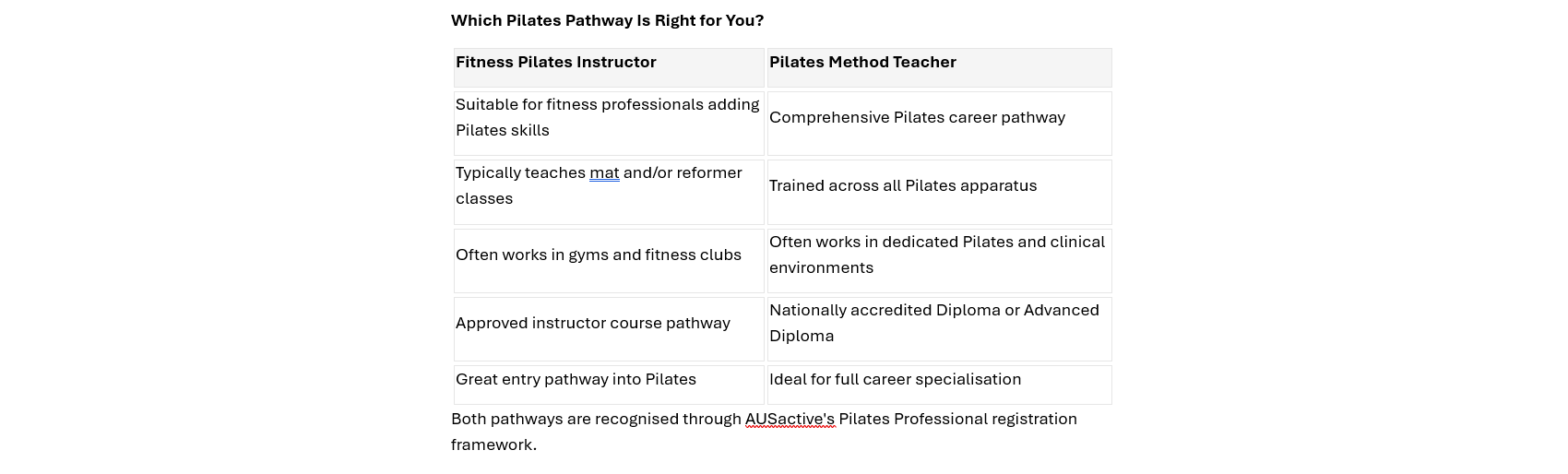
There is no single qualification pathway into Pilates. However, AUSactive recognises two distinct professional pathways for Pilates professionals.
These pathways help employers, clients and practitioners understand the education, scope of practice and professional standards associated with different Pilates qualifications.
Both pathways require current nationally recognised First Aid and CPR certification and provide opportunities for professional recognition through AUSactive's Pilates Professional membership category.
Learn more about the AUSactive Pilates Professional framework:
AUSactive Pilates Professional Membership
Pathway 1: Fitness Pilates Instructor
A Fitness Pilates Instructor (FPI) is trained to deliver Pilates classes for individuals and groups using matwork, reformers and small apparatus in line with their formal training and assessment.
This pathway is ideal for:
- Personal Trainers
- Group Exercise Instructors
- Gym Instructors
- Fitness professionals wanting to add Pilates to their services
- New instructors entering the Pilates industry
AUSactive provides two eligibility routes within the Fitness Pilates Instructor category.
Pathway 1
Complete an AUSactive-approved Fitness Pilates Instructor qualification.
Pathway 2
Already qualified as a Personal Trainer or Group Exercise Instructor? Complete approved Pilates training and expand your scope of practice to include Pilates instruction.
Learn more about the Fitness Pilates Instructor pathway:
Fitness Pilates Instructor Requirements and Approved Courses
Pathway 2: Pilates Method Teacher
A Pilates Method Teacher (PMT) has completed an Australian nationally accredited Pilates Diploma or Advanced Diploma that covers the full Pilates method and all major Pilates apparatus.
Pilates Method Teachers are trained to:
- Deliver private, semi-private and group sessions
- Conduct client assessments
- Develop individualised programs
- Work collaboratively with allied health professionals
- Support clients with managed or stabilised conditions
- Teach across all major Pilates apparatus
Including:
- Mat
- Reformer
- Cadillac / Trapeze Table
- Pilates Chair
- Barrels
- Small Apparatus
This pathway is ideal for professionals seeking a long-term, specialised Pilates career.
Learn more about the Pilates Method Teacher pathway:
Pilates Method Teacher Requirements and Approved Qualifications
Mat Pilates vs Reformer Pilates
Understanding the difference between Mat Pilates and Reformer Pilates is important when planning your career.
Mat Pilates
Mat Pilates uses body weight and small apparatus such as:
- Resistance bands
- Magic circles
- Pilates balls
- Foam rollers
Benefits include:
- Lower setup costs
- Easier delivery in community settings
- Suitable for large group classes
- Accessible entry point into Pilates teaching
Reformer Pilates
Reformer Pilates uses a specialised piece of equipment featuring springs, pulleys and a sliding carriage.
Benefits include:
- Highly adaptable exercises
- Strong consumer demand
- Opportunities within boutique studios
- Enhanced specialisation opportunities
Many employers actively seek instructors with reformer Pilates qualifications.
Career Pathways for Pilates Professionals
Pilates can open the door to a wide variety of careers.
Pilates Studio Instructor
The most common career option.
Responsibilities may include:
- Teaching classes
- Conducting private sessions
- Client assessments
- Programming
Reformer Pilates Specialist
An increasingly popular and specialised role focused primarily on reformer-based instruction.
Allied Health and Rehabilitation Settings
Some Pilates professionals work alongside:
- Physiotherapists
- Exercise Physiologists
- Chiropractors
- Allied Health professionals
Fitness and Wellness Centres
Many gyms and leisure centres now offer Pilates services.
Studio Management
Career progression opportunities may include:
- Lead Instructor
- Studio Manager
- Educator
- Operations Manager
Business Ownership
Many experienced Pilates instructors establish:
- Boutique Pilates studios
- Mobile Pilates businesses
- Online coaching programs
- Hybrid wellness businesses
How Much Do Pilates Instructors Earn?
Pilates instructor income varies significantly depending on:
- Location
- Experience
- Qualifications
- Employment arrangement
- Private session delivery
- Reformer specialisation
- Business ownership
Factors That Influence Earnings
Experience
Experienced instructors often have stronger client retention and more consistent demand.
Reformer Qualifications
Reformer instructors are frequently in high demand and may have access to more opportunities.
Specialist Skills
Areas such as:
- Women's health
- Active ageing
- Rehabilitation
- Sports performance
can enhance career opportunities.
Private Sessions
Private and semi-private sessions can create additional income streams alongside group classes.
How to Find Pilates Instructor Jobs
Build a Professional Profile
Ensure you have:
- Updated qualifications
- Current First Aid & CPR
- Professional biography
- Resume
- Ongoing professional development
Gain Practical Experience
Employers value teaching experience.
Consider:
- Cover classes
- Mentoring opportunities
- Community programs
- Studio placements
Network Within the Industry
Building professional connections often leads to new opportunities.
Attend:
- Industry conferences
- Professional development events
- Pilates workshops
- Networking events
Use Industry-Specific Job Boards
The AUSactive Jobs Board helps connect Pilates professionals with employers across Australia.
Explore Pilates Jobs on the AUSactive Jobs Board
Future Opportunities in Pilates
Several trends are expected to continue driving demand.
Growth in Reformer Pilates
Boutique reformer studios continue to expand across Australia.
Increased Health Integration
Pilates is increasingly used within broader health and wellbeing programs.
Hybrid Coaching Models
Many instructors now combine:
- Face-to-face coaching
- Online memberships
- Virtual classes
- Digital programs
Demand for Specialist Skills
Growth areas include:
- Active ageing
- Women's health
- Post-rehabilitation exercise
- Corporate wellness
- Strength-focused Pilates
Frequently Asked Questions About Becoming a Pilates Instructor
Can I become a Pilates instructor if I am already a Personal Trainer?
Yes. AUSactive's Fitness Pilates Instructor pathway includes options specifically designed for existing Personal Trainers and Group Exercise Instructors who want to expand their services through approved Pilates training.
Do I need Reformer Pilates qualifications?
Not necessarily. Many instructors begin with mat Pilates. However, reformer Pilates continues to be one of the strongest growth areas in the industry and can significantly expand employment opportunities.
Can Pilates instructors work in allied health settings?
Yes. Pilates professionals often work alongside physiotherapists, chiropractors and exercise physiologists. Pilates Method Teachers are particularly well positioned for these environments due to their broader education and scope of practice.
Can I open my own Pilates studio?
Yes. Many experienced instructors eventually establish their own studios, wellness businesses or online coaching services.
Why become an AUSactive Pilates Professional?
Becoming an AUSactive Pilates Professional demonstrates your commitment to professional standards, ongoing development and quality client outcomes.
Benefits include:
- Professional recognition
- Directory listing
- Continuing education opportunities
- Career and employment support
- Industry resources
- Member benefits
Learn More About AUSactive Pilates Professional Membership
Ready to Explore a Career in Pilates?
Whether you're looking to teach group reformer classes, specialise in comprehensive Pilates instruction or expand your existing fitness qualifications, understanding the right education pathway is the first step.
Explore AUSactive's dedicated Pilates pathways:
And when you're ready to find your next opportunity:
Explore Pilates Instructor Jobs on the AUSactive Jobs Board
Start building a rewarding Pilates career today.